
Most people buying a first diamond are making the largest single buy of their life so far, in a category where they cannot judge quality by looking. That is an uncomfortable place to spend from. The way out is not more browsing. It is knowing which two or three things actually decide whether a stone looks alive on the hand.
Choosing a diamond engagement ring is worth doing in the right order: the setting first, then the diamond, then the gold colour. With so many options, the process can feel overwhelming. But understanding what actually sets the price makes the decision far more straightforward than browsing at random.
The 4Cs: What Actually Determines a Diamond’s Quality
Every diamond is judged on four things: cut, colour, clarity, and carat.
| The C | What it controls | Visible to the naked eye? | Where to spend |
|---|---|---|---|
| Cut | How much light returns to the eye | Yes, dramatically | Spend here first |
| Carat | Weight, and apparent size | Yes | Spend second |
| Colour | How near-clear the stone is | Only at low grades | Mid grade is enough |
| Clarity | Natural marks inside the stone | Usually not | Mid grade is enough |
- Cut is the most important, because it determines how much light the stone returns to the eye. A smaller diamond with an excellent cut often outshines a larger stone cut to preserve carat weight.
- Colour describes how close to clear a stone is – it doesn’t need to be perfect, since most differences are invisible without magnification.
- Clarity measures natural marks. Again, near-flawless clarity rarely justifies its price premium if the marks aren’t visible to the naked eye.
- Carat is simply weight, and the one factor most buyers fixate on first, even though it matters less to visual sparkle than cut.
If budget is a constraint, prioritise cut first, then decide carat based on what’s left, with colour and clarity kept at a reasonable rather than flawless grade.
Solitaire vs. Halo vs. Twin-Ring Settings
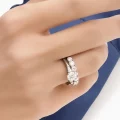
The solitaire setting – a single diamond on a plain band – remains the classic choice. Nothing competes with the stone, and its flat shoulder pairs cleanly with a wedding band later. A halo setting surrounds the centre stone with smaller diamonds, making it read larger on the hand without moving up in carat weight. For couples who want the wedding band to sit flush against the engagement ring from day one, twin ring sets are designed specifically for that fit.
Natural vs. Lab-Grown Diamonds
Natural diamonds form underground over millions of years; lab-grown diamonds share the same chemical structure but are produced in weeks. Both are real diamonds – the difference is origin and, usually, price. Every diamond in the Kooheji Diamonds collection is natural. Each stone is graded individually for cut, colour, and clarity before it’s set, rather than assessed as a batch – so you know exactly what you’re getting.
Choosing the Gold Colour
Gold colour changes the ring’s entire character. White gold brings out a diamond’s brightness with the least colour competition. It is the most common choice for engagement rings. Rose and yellow gold add warmth and a more classic feel. This is a matter of personal taste rather than a rule – see the setting on the hand before deciding, since photos rarely capture the difference accurately.
What to Ask Before You Buy
Before committing to a ring, it’s worth asking: is the diamond checked by an outside expert, and can you see the certificate? What is the return or exchange policy if the ring doesn’t fit or she doesn’t love it? Is resizing included, and within what timeframe? A shop confident in its diamonds and the making should answer all of these without hesitation.
Sizing Without Knowing Her Size
Buying as a surprise? Borrow a ring she already wears on that finger. It is the most reliable way to guess size. Or ask a close friend. Most trusted jewellers can resize a ring after you buy, within a reasonable window, so an imperfect first guess isn’t a disaster.
A Practical Budget Example
Say your budget is fixed. Rather than maximising carat weight within it, allocate roughly 60-70% to an excellent-cut stone at a slightly smaller carat, and the remainder to a well-crafted setting. A 0.9-carat excellent-cut diamond will usually look brighter and more brilliant than a 1.1-carat stone cut only to ‘good’ grade, even though the second number looks larger on paper. This is the single most common trade-off buyers get wrong when shopping by carat size alone.
| Budget split | Goes toward | Why |
|---|---|---|
| 60 to 70% | Cut grade | Cut decides brightness more than any other factor |
| 20 to 30% | Carat weight | Size matters, but a dull large stone looks worse |
| 10 to 15% | Setting and band | Protects the stone and carries daily wear |
How Kooheji Compares to Global Luxury Houses
International houses bring brand prestige and globally recognised design language. What a local jeweller offers instead is direct, in-person comparison of stones before you commit. A natural-diamond-only sourcing policy verified on-site. And appointment-based service where a specialist walks you through grading differences stone by stone, rather than a general catalogue description. Both approaches are valid – the right choice depends on whether brand name or hands-on comparison matters more to your decision.
Ring Insurance and Paperwork
For a ring of this value, keep the grading certificate and invoice together. Consider insuring the ring separately from general home insurance. Ask whether an outside valuation is available when you buy – that documented appraisal, not the receipt alone, is usually what an insurer needs years later.
What the Pages Already Ranking Do Not Tell You
| Buyer question | Covered by the pages currently ranking? |
|---|---|
| What the 4Cs are | Yes. The top-ranking page answers this in its FAQ |
| Which C to prioritise when budget is fixed | No page gives a spending rule |
| Natural versus lab-grown | No page in the top 10 explains the difference |
| How to size a ring without her knowing | No page covers it |
| Whether to insure the ring, and what an insurer needs | No page mentions appraisal or insurance |
Checked on 1 August 2026 against the live page text of the results ranking in Saudi Arabia. Cartier, Tiffany and Jared return an automated-access block, so they were excluded rather than assumed.
Questions to ask before you pay
- Can I see the grading certificate for this exact stone?
- Is the stone natural or lab-grown, and is that stated in writing?
- What is the cut grade specifically, not just the carat weight?
- Can I compare two stones of the same carat with different cut grades?
- What is the resizing window after you buy, and is it included?
- What does the exchange policy cover if the ring is not right?
- Can I get an outside valuation document for insurance?
- Will the wedding band sit flush against this setting later?
Choosing With Confidence
Book an appointment to compare stones of the same carat but different cut grades side by side. The difference is obvious in person and hard to judge from photos. Most buyers change their mind once they compare in the boutique. Explore the full engagement range, and see our Waad collection designed specifically for this moment.
Frequently Asked Questions
What is the most important of the 4Cs?
Cut, because it determines how much light the diamond returns and directly affects how bright the stone looks – more than colour, clarity, or even carat weight.
What’s the difference between natural and lab-grown diamonds?
Both share the same chemical structure, but natural diamonds form underground over millions of years while lab-grown diamonds are produced in a matter of weeks. Every diamond in our collection is natural and individually graded.
Is a solitaire or a halo setting better for an engagement ring?
A solitaire keeps the focus entirely on the centre stone and pairs cleanly with a wedding band later. A halo makes the stone appear larger without increasing carat weight. The choice comes down to preferred look, not one being objectively better.
How much should I spend on an engagement ring?
There is no fixed rule. Set a budget first, then put cut ahead of carat weight. A well-cut smaller stone often looks brighter than a larger, poorly cut one.
Which gold colour is best for an engagement ring?
White gold is the most common choice, because it brings out a diamond’s brightness with minimal colour competition. Rose and yellow gold suit those who prefer a warmer, more classic look.
How do I know if a diamond is certified?
Ask to see the independent grading certificate before you buy. It should state the cut, colour, clarity, and carat weight specifically for that stone, not a general collection description.
Can the ring be resized later?
Most trusted jewellers offer resizing within a defined window after you buy, which is why an imprecise first size estimate for a surprise proposal isn’t a serious problem.
How do I choose a ring size without her knowing?
Borrow a ring she already wears on the correct finger to estimate size, or discreetly ask a close friend or family member for help.
What should I ask before buying a diamond ring?
Ask three things. Is the stone checked by an outside expert, with a certificate you can see? What does the exchange policy cover? Is resizing included, and for how long?
Can I plan the wedding band at the same time as the engagement ring?
Yes. Twin ring sets are designed so the wedding band sits flush against the engagement ring from the start. You won’t need to search for a matching band later.
Should I prioritise carat size or cut quality?
Cut quality, generally. A smaller stone with an excellent cut usually looks brighter than a bigger one graded only good. Putting 60-70% of budget into cut is a sensible start.
How does buying locally compare to a global luxury brand?
A local jeweller offers in-person comparison of stones before committing and a natural-diamond-only sourcing policy verified on-site, while global brands offer broader brand recognition. Both are valid depending on what matters most to you.
Should I insure an engagement ring?
Yes, especially for higher-value pieces – keep the grading certificate and invoice together, and ask about an outside valuation when you buy, which is usually what insurers require.
How long does grading usually take to verify?
A trusted jeweller can show you the outside certificate immediately at time of viewing – there’s no reason to wait days for this information before deciding.
What if she has a specific setting style in mind already?
Bring a photo or description to your appointment. A specialist can usually identify the closest match in the collection, or discuss a custom variation before you commit to a specific stone.
Does a bigger halo always look better than a solitaire?
Not necessarily. A halo makes a stone read larger without added carat weight. A solitaire keeps the design cleaner and pairs more simply with a wedding band later.
What if I want a coloured stone instead of a diamond?
Sapphires and rubies are popular options for colour. They follow different hardness and care rules than diamond, so ask a specialist to compare strength before deciding.
What if the ring needs adjusting after the proposal?
Most jewellers offer a resizing window after you buy specifically for this reason, so book the appointment for adjustment as soon as the size is confirmed rather than waiting.



 Contact Us
 My Account
 Find a Boutique