
Diamonds and gold are bought together far more often than either is bought alone, yet most guidance treats them separately. The decisions that matter are the ones where they interact: which karat holds stones securely, how metal colour changes the way a diamond looks, and why two pieces of the same carat weight can differ sharply in price. This guide covers those, in the order you meet them.
The karat decides how securely the stone sits
This is the most practical point and the one most often skipped. A higher karat means more pure gold, a warmer colour and better value by weight, but a softer metal. Softer metal means prongs that bend more easily and settings that loosen sooner under daily wear.
That is why 18k is the standard choice for diamond-set pieces. It is hard enough to hold a stone firmly over years of wear, while still being unmistakably gold. A 21k or 22k setting is softer and better suited to plain pieces where nothing has to be gripped. Choosing a high karat for a diamond ring worn every day is a common and avoidable mistake, and it usually shows up as a loose stone rather than as a visible flaw.
| Karat | Pure gold | Holds stones | Best for |
|---|---|---|---|
| 22k | 91.6% | Weakest, softest | Plain pieces, value by weight |
| 21k | 87.5% | Moderate | Light stone accents |
| 18k | 75.0% | Strongest | Diamond settings, daily wear |
Metal colour changes how the diamond looks
A diamond does not look the same in every metal, and the effect is larger than most buyers expect. White metal beside a diamond makes it read whiter, because there is no warm tone next to it for the eye to compare against. Yellow gold does the opposite: it lends a faint warmth to the stone, which can make a slightly warmer diamond look worse, or can make a warmer stone blend in deliberately.
The useful consequence is a budget one. A diamond a little lower on the colour scale often looks perfectly white in a yellow gold setting, because there is no white metal beside it to expose the difference. Buying a high colour grade and then setting it in yellow gold spends money on a distinction nobody can see.
Which of the four Cs to spend on
Cut, colour, clarity and carat weight do not carry equal weight in practice. Cut has the largest effect on how a diamond actually looks, because it decides how much light returns to the eye. A well cut stone of lower colour and clarity will usually look brighter than a poorly cut stone that grades better on paper.
Clarity matters least visually once the inclusions are no longer visible without magnification. Carat weight moves price fastest, which is why choosing a weight just below a round number often buys a visually similar stone for noticeably less. If you have to rank them for a piece you will wear rather than resell, cut first, then carat, then colour, then clarity.
Read the certificate, not the summary
A grading report from a recognised laboratory is what separates a described stone from a verified one. Check that the report number matches the stone in front of you. Then look at the plotted diagram showing where the inclusions sit, because two stones with the same clarity grade can look quite different depending on position: an inclusion under the table is far more noticeable than one near the girdle.
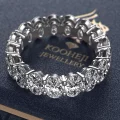
For pieces with many small stones rather than one centre stone, individual certificates are not usual. What matters there is consistency: the stones should match one another in cut and colour, because a line or cluster reads as one bright surface only when they do.
Why two similar pieces differ in price
Three things account for most of it. The first is stone matching: a piece built from stones selected as a set costs more than one assembled from stones bought by weight, and the difference is visible under a single light source. The second is cut quality across all the stones, not just the largest. The third is the setting work itself, since more stones mean more individual settings and more labour.
This is why total carat weight alone tells you very little. Ask how the stones were selected and graded rather than only what they weigh together.
Every diamond we set comes from Kooheji Diamonds and is graded before setting. The Noor collection suits layering and daily wear, while solitaire pieces put the whole decision on a single stone.
Matching gold and diamond pieces across a set
If you are building a set over time rather than buying it at once, the thing to control is the metal, not the stones. Keep the karat and the colour consistent across pieces and they will read as belonging together even if the stone sizes differ. Mixed karats in the same colour usually still work; mixed colours rarely do unless the mixing is deliberate.
Ask whether the seller records the specification of your piece. If they do, a matching piece bought two years later can be built to the same stone grade and metal colour. Without that record, later additions tend to be visibly slightly off, and the mismatch shows most in daylight.
Caring for diamond-set gold
Diamonds are hard but the metal holding them is not, and almost every problem starts with the setting rather than the stone. Have stone-set pieces checked once or twice a year: settings loosen gradually with wear, and a check catches that long before a stone is lost. That inspection costs far less than replacing a stone.
Day to day, remove pieces before swimming, cleaning products and the gym. Clean with warm water, mild soap and a soft brush, paying attention to the underside of the stones, where the film that dulls a diamond actually collects. Store pieces separately, because a diamond will scratch gold and every other stone it touches.
Natural against laboratory-grown diamonds
Laboratory-grown diamonds are chemically and optically diamond, with the same hardness, and they are graded on the same four Cs. The difference is origin and price, and the price gap is large.
Which suits you depends on what the piece is for. For a piece bought to be worn and enjoyed, a lab-grown stone buys visibly more size and clarity for the same money. For a piece intended to hold value or be passed on, natural remains the choice, because the resale markets behave differently. What matters either way is disclosure: the report should state which it is, and any seller should answer the question without hesitating.
| Buyer question | Covered by the pages ranking now? |
|---|---|
| Which karat holds stones securely | Only 1 of 8 |
| How metal colour changes the stone | Only 1 of 8 |
| How to read the grading report | Only 1 of 8 |
| How often settings should be checked | Only 4 of 8 |
We compared the section structure of the 8 pages ranking for this term in Saudi Arabia (August 2026). The table shows which questions they give a section to. What they leave out is what the sections above cover.
Before buying a diamond and gold piece
- Choose 18k for anything stone-set that will be worn regularly.
- Decide the metal colour knowing it changes how white the stone reads.
- Prioritise cut over clarity if you have to choose.
- Ask for the grading report and check the number matches the stone.
- For multi-stone pieces, ask how the stones were matched, not just their total weight.
- Ask whether the specification is recorded, if you plan to add matching pieces later.
- Book a setting inspection once or twice a year.
Frequently asked questions
Which gold karat is best for diamond jewellery?
18k. It is hard enough to hold stones securely through daily wear while still being clearly gold. Higher karats are softer, so prongs bend and settings loosen sooner, which is why they suit plain pieces better than stone-set ones.
Do diamonds look different in yellow and white gold?
Yes, noticeably. White metal makes a diamond read whiter because there is no warm tone beside it for comparison. Yellow gold lends a slight warmth to the stone. This means a diamond a little lower on the colour scale often looks perfectly white in yellow gold, which is a practical way to spend the budget where it shows.
Which of the 4Cs matters most?
Cut, because it decides how much light the stone returns and therefore how bright it looks. A well cut stone can outshine one that grades higher on colour or clarity but is cut poorly. Clarity matters least once inclusions are invisible without magnification.
Why do two pieces with the same carat weight cost differently?
Mainly stone matching, cut quality across all the stones, and the setting labour. A piece built from stones selected as a set costs more than one assembled by weight, and the difference is visible under a single light. Total carat weight on its own tells you very little.
How often should diamond-set gold be checked?
Once or twice a year for anything worn regularly. Settings loosen gradually with wear, and an inspection catches that before a stone is lost. It costs far less than replacing a stone, and it is the single most useful thing you can do for a stone-set piece.
Can I add matching pieces to a set later?
Yes, if the specification was recorded at purchase. Keeping the karat and metal colour consistent matters more than matching stone sizes exactly. Without a record of the original stone grade and colour, later additions often end up visibly slightly off, most noticeably in daylight.



 Contact Us
 My Account
 Find a Boutique