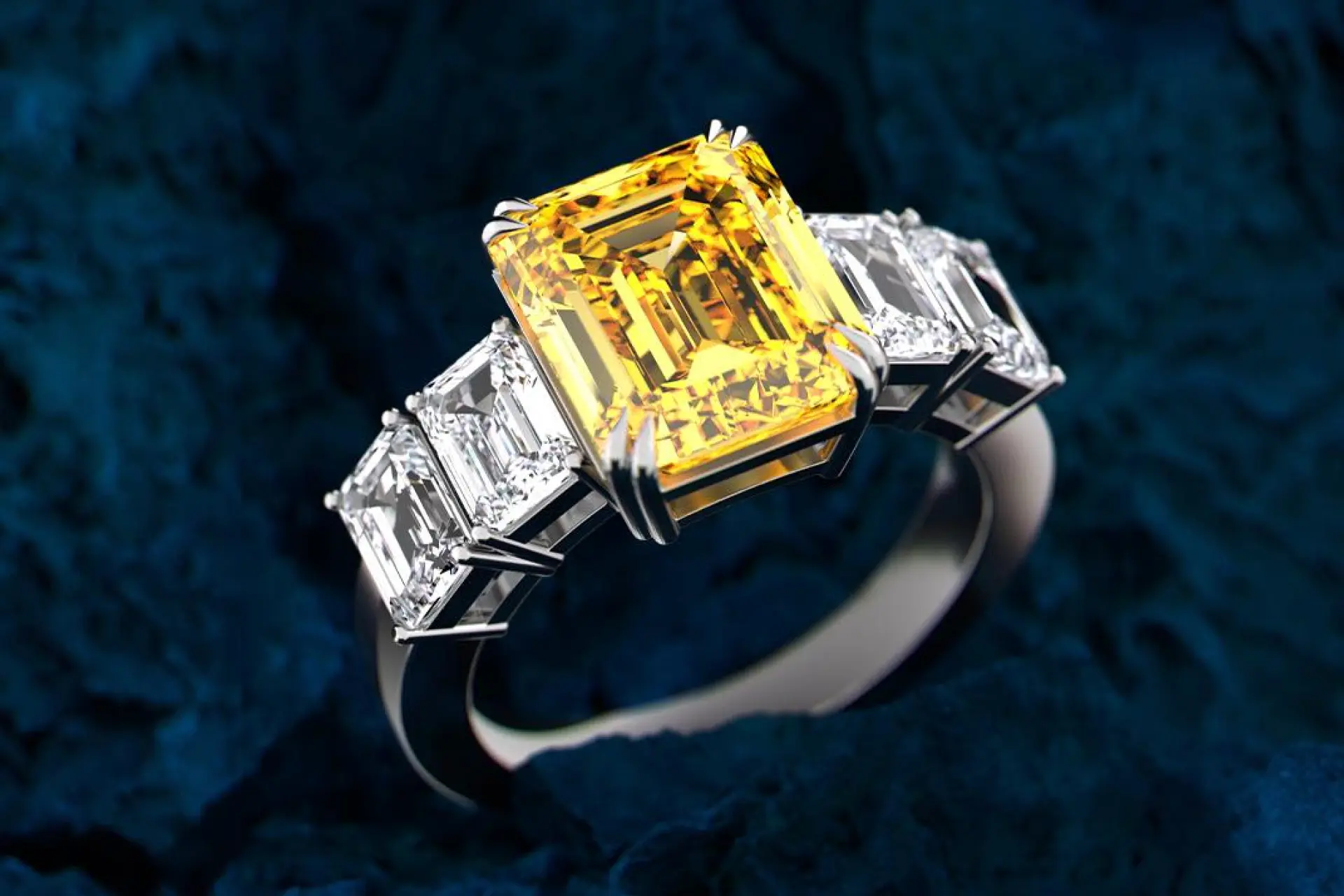
What is the Most Expensive Diamond Cut?Diamonds are among the most valuable and rarest gemstones in the world, and their value is determined based on several key factors known as the “4 Cs”: carat, color, clarity, and cut. Understanding the Diamond Color Grading is essential to seeing how these factors interplay. Additionally, rarity and the royal history or stories associated with a diamond play a significant role in increasing its value.
What Is the Most Expensive Diamond Cut? Discover the Cut That Commands
Here are some of the world’s most expensive diamonds and their detailed specifications in a comprehensive guide:
Koh-i-Noor Diamond:
- Estimated Value: Priceless, but some estimate it at $1 billion.
- Weight: 105 carats.
- Origin: India, dating back to the 13th century.
- Features: Distinguished by its multiple facets and unique cut. It is currently part of the British Crown Jewels.
Cullinan Diamond:
- Estimated Value: Over $400 million.
- Weight: The original rough diamond weighed 3,106.75 carats. It was divided into 9 main stones and 96 smaller pieces.
- Origin: Discovered in South Africa in 1905.
- Features: It is the largest high-quality rough diamond ever discovered. The 530-carat Cullinan I (Great Star of Africa) is known as the largest colorless fancy vivid diamond in the world and is part of the British Sovereign’s Sceptre.
Hope Diamond:
- Estimated value: $200-$250 million.
- Weight: 45.52 carats.
- Origin: Ancient India.
- Features: A rare blue diamond and one of the world’s most famous and mysterious diamonds. It is said to have brought bad luck to its owner, hence its nickname, the “Cursed Diamond.” It is currently on display at the Smithsonian in Washington, D.C.
Pink Star (CTF Pink Star):
- Price: Sold for approximately $71.2 million at a Sotheby’s auction in Hong Kong in 2017.
- Weight: 59.60 carats.
- Features: A natural Fancy Vivid Pink diamond, the most expensive diamond ever sold at auction. It is one of the most beautiful and largest internally flawless pink diamonds, showcasing why Natural and Lab-Grown Diamonds differ so significantly in price and rarity.
Oppenheimer Blue:
- Price: Sold for $57.5 million in 2016.
- Weight: 14.62 carats.
- Features: A vivid blue diamond, one of the most expensive diamonds ever sold at auction.
Graff Pink:
- Price: Sold for $46.2 million at Sotheby’s in 2010.
- Weight: 24.78 carats.
- Features: A rare pink diamond, considered one of the most important pink diamonds ever sold. Jeweler Laurence Graff enhanced its appearance after purchasing it.
Bleu Royal:
- Price: Sold for $43.8 million at a Christie’s auction in Geneva in 2023.
- Weight: Unknown, but described as perfect.
- Features: A vivid blue diamond, it is the most expensive piece of jewelry sold in 2023.
Why Diamond Cuts Affect Price More Than You Think
A diamond’s cut significantly affects its price because it’s the most important factor in determining its beauty and brilliance. Here are the main reasons:
- Brilliance: The amount of white light reflected from within the diamond to the viewer’s eye. A good cut ensures that light enters from above, reflects completely through the internal facets, and then emerges from above, creating an intense sparkle.
- Scintillation: The flash of light that appears when a diamond is moved. This depends on the contrast between the light and dark areas of the diamond as a result of light reflection.
- Symmetry: Refers to how perfectly aligned and symmetrical the diamond’s facets are. Asymmetrical facets can negatively impact the path of light within the stone.
- Polish: Refers to how smooth the diamond’s outer surfaces are. Any imperfections or scratches on the surface can scatter light and reduce the diamond’s brilliance.
Cut vs. Carat: The Hidden Price Driver
When talking about diamonds, “cut” and “carat” are two of the most important characteristics that determine a diamond’s quality and value, and they are completely different from each other:
Carat:
- Definition: A carat is a unit of measurement for weight, not size. One carat equals 200 milligrams (or 0.2 grams).
- Importance: The higher the carat weight, the higher the diamond’s overall price. However, carat alone does not fully determine a diamond’s value or beauty.
- For example, you may have a 1-carat diamond and another 1-carat diamond, but they may differ greatly in price and beauty due to other factors such as cut, color, and Professional Diamond Clarity.
Cut:
- Definition: Cut refers to how skillfully a rough diamond is cut and shaped into a finished gem. It relates to how the diamond interacts with light. This includes dimensions, proportion, symmetry, and the quality of the polished facets.
- Importance: Cut is the most important of the “4 Cs” (carat, cut, color, clarity) because it directly affects a diamond’s brilliance, fire, and scintillation.
- Impact on Appearance: A well-cut diamond can appear larger and more brilliant than a larger carat diamond with a poorer cut. a poor cut can look dull, unlike the intentional, deep opacity explained in our Guide to Understanding Black Diamonds..
- Human Factor: Cut is the only 4 Cs factor directly influenced by the diamond maker’s skill.
Brilliance, Light Performance, and Value
- Symmetry: Refers to how precisely aligned and symmetrical the diamond’s facets are. Asymmetrical facets can negatively impact the path of light within the stone.
- Polish: Refers to how smooth the outer surfaces of a diamond are. Any surface imperfections or scratches can scatter light and reduce the diamond’s brilliance.
- Brilliance: The amount of white light reflected from within a diamond to the viewer’s eye. A good cut ensures that light enters from the top, reflects completely through the inner facets, and then emerges from the top, creating an intense sparkle.
- Fire: The dispersion of white light into the colors of the spectrum (the colors of the rainbow). A perfect cut diffuses the light in a way that allows these sparkling colors to appear.
How Precision Crafting Impacts Cost
Cutting a rough diamond into a sparkling gemstone requires high technical skill and extreme precision. It’s a complex process that requires years of experience. A perfectly cut diamond requires more time, effort, and expertise from the diamond cutter, increasing the cost of production and, consequently, the price.
Ranked: The Most Expensive Diamond Cuts in 2025
- The “Bleu Royal” diamond: Sold in November 2023 for $43.8 million, making it the most expensive piece of jewelry sold in 2023 to date. This 17.61-carat blue diamond is considered an extremely rare and perfect gem.
- The “Oppenheimer Blue” diamond: It remains the most expensive diamond in auction history, having sold for $57.5 million in 2016.
- The “CTF Pink Star” diamond: Sold in April 2017 for $71.2 million.
- The “Graff Pink” diamond: Sold in 2010 for $46.2 million.
- The “De Beers Centenary Diamond”: Valued at approximately $100 million, it was discovered in 1986.
Round Brilliant — The Most Expensive and Sought-After
The “round brilliant” cut is known for its unique geometric design, featuring 58 facets specifically designed to maximize light reflection and dispersion. This cut allows light to enter the diamond, reflect internally, and then emerge from above as sparkle, brilliance, and fire. This cut produces a tremendous amount of brightness (reflected white light), fire (the flashing of spectral colors), and scintillation (the areas of light and dark called scintillation). This makes it appear so sparkling and attractive.
Princess, Cushion, Oval, and Other High-Cost Contenders
The most expensive diamonds aren’t necessarily just because of their shape; their value is also strongly influenced by their rarity, especially extremely rare colored diamonds of large size and exceptional clarity. However, the round brilliant cut remains the most expensive of all diamond shapes.
Princess diamonds are the second most popular diamond shape after round brilliant. They are known for their square or rectangular shape with pointed corners, offering excellent brilliance and sparkle.
Cushion diamonds are square or rectangular with rounded corners, giving them a soft “cushion” appearance. They have been popular for centuries and have a classic, vintage appeal.
Oval diamonds are an elegant combination of round brilliant and pear-shaped diamonds. They offer a similar sparkle to round diamonds, but with an elongated shape that can make fingers appear longer and more slender.
Rare Custom Cuts That Defy the Market
Round brilliant diamonds have long dominated the market, but there’s growing interest in other shapes that offer a unique look. These rare, custom cuts are not just about a different shape; they require the skill and precision of cutters to showcase the stone’s beauty like never before.
What Makes the Round Brilliant Cut So Expensive?
The price of a round brilliant cut (round brilliant diamond) depends largely on several factors known as the “4 Cs”:
Cutting Waste: Why Round Loses the Most Rough Stone
This is the most important factor affecting a diamond’s brilliance and sparkle For complete details, see our our Comprehensive Guide to Diamond Cuts. The round brilliant cut is the most common and the most complex to shape, requiring a high degree of skill from cutters. When a diamond is cut perfectly, it reflects light internally from one facet to the other, creating exceptional brilliance, fire, and shimmer. Diamonds with an excellent cut are significantly more expensive than those with lesser cuts because they reflect light better.
Light Return & Optical Symmetry
Proportion and symmetry: These aspects determine how a diamond interacts with light. A perfect cut allows light to enter from above, reflect fully internally, and then return to the eye, creating maximum brilliance.
High Demand Among Brides & Collectors
Round brilliant diamonds are the most popular cut, increasing their demand and thus their price compared to other shapes.
Choosing the Right Cut for Your Budget and Style
When choosing a diamond, there’s a delicate balance between achieving the quality you desire and staying within your budget. Additionally, the piece should reflect your personal style. Here are the key factors to consider:
Best Cuts for Visual Size Per Carat
It’s how large a diamond appears when viewed from above. A one-carat diamond can appear visually larger or smaller depending on its cut and shape. For example:
- Cut Quality: A well-cut diamond reflects light better, making it appear brighter and more sparkling, and may appear larger than it actually is.
- Shape: Elongated shapes such as oval, marquise, and pear often appear larger than round diamonds of the same carat weight due to their larger surface area.
Balancing Cut Quality and Price
- Importance: Cut is the most important factor affecting a diamond’s brilliance and sparkle. Cut does not refer to a diamond’s shape (such as round or square), but rather to the precise proportions, symmetry, and polish of the diamond. A good cut allows light to enter the diamond and reflect back to the eye, creating brilliance, fire, and scintillation.
- Scale: Cut quality is graded by gemological laboratories (such as the GIA) from Excellent/Ideal to Poor. This grade primarily applies to round brilliant diamonds.
Investing in the Right Cut for Resale or Heirloom
- Investing in diamonds requires in-depth market knowledge and is often suitable for large, long-term investors.
- Carat Size: Larger diamonds (over 1-2 carats) hold better investment potential due to their rarity.
- Liquidity: Diamonds are not as liquid as stocks or bonds, and selling them can take time. Round diamonds are the most liquid on the market.
FAQs About Diamond Cut Prices
Is cut or clarity more important for diamond price?
Cut is the most influential factor in a diamond’s beauty and apparent brilliance. A perfectly cut diamond will appear more beautiful and sparkling even if it has average clarity, compared to a diamond of high clarity.
Can I get a round brilliant cut for less?
If “brilliant” means diamonds, natural diamonds are expensive. You can consider stunning, affordable alternatives such as:
Moissanite: Looks almost identical to diamonds, with the same sparkle and longevity, but is much cheaper.
Cubic zirconia (CZ): A very economical option, but not as durable or long-lasting as moissanite or diamond.
White sapphire or white topaz: Natural gemstones that are transparent and brilliant can be a good alternative.
Are custom diamond cuts more expensive than standard?
The cost of a diamond depends on the “four Cs”: carat, color, clarity, and cut. Cut is one of the most important factors affecting a diamond’s brilliance and ultimate value. An excellent-cut diamond, even if it has a lower carat weight, can appear more dazzling and valuable than a larger diamond with a lower-quality cut.



 Contact Us
 My Account
 Find a Boutique