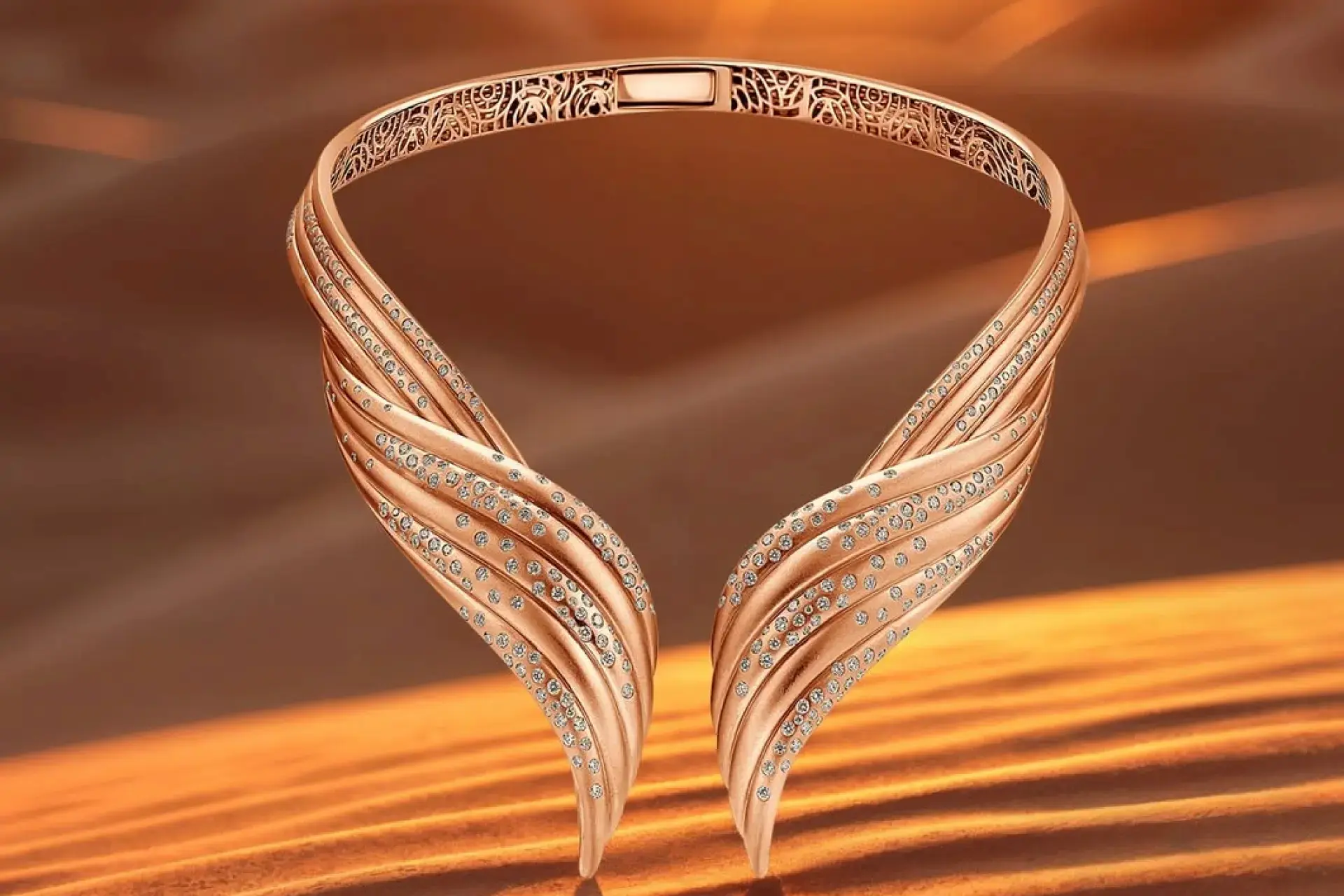
The history of Saudi jewelry designs is a living archive of culture, faith, and identity — stretching from Bedouin silver amulets worn in the open desert to today’s diamond-set masterpieces crafted for royalty and modern brides alike. No other tradition in the region carries such a layered story of regional diversity, spiritual meaning, and artistic evolution. This guide traces that journey from its earliest roots to the contemporary revival fueled by Vision 2030.
Ancient Roots: Bedouin and Pre-Islamic Saudi Jewelry
The oldest jewelry found in the Arabian Peninsula dates back thousands of years, made from the materials closest to hand: shells, animal bones, polished natural stones, and later, silver. For the Bedouin tribes who shaped much of Arabia’s cultural foundation, jewelry was never purely decorative — it was wealth stored on the body, a portable treasury that traveled with its owner across the desert.
Bedouin women wore heavy silver pieces that were passed from mother to daughter across generations. But far from being a single unified style, Saudi jewelry developed distinctly different regional traditions:
- Najdi jewelry (central region): Bold, geometric silver designs — large polished stones set in wide cuffs, chunky necklaces, and headpieces. The visual language was angular and architectural, reflecting the austere landscape of the Najd plateau.
- Southern Saudi jewelry: Heavily influenced by the Red Sea trading culture, Southern pieces often featured coral, amber, and vivid colors. Maritime connections brought in materials and ideas rarely seen inland.
- Eastern Province jewelry: Persian Gulf trade routes brought Indian and Persian artisans into contact with local craftspeople. The result was more delicate, intricate filigree work and detailed stone settings — a fusion of Arabian boldness with Eastern precision.
- Hejazi jewelry: In the holy cities of Mecca and Medina, proximity to global pilgrimage routes meant constant cross-cultural exchange. Hejazi pieces showed early evidence of gold use alongside silver, and more ornate decorative detail than inland styles.
Traditional Saudi Jewelry Pieces and Their Symbolism
Each piece in the traditional Saudi jewelry repertoire carried meaning beyond its material value. Understanding these pieces is essential for appreciating why Saudi jewelry is considered one of the most symbolically rich traditions in the Arab world.
- Al-Khulkhal (الخلخال): The ankle bracelet, worn by women as a sound ornament — its soft chime was considered graceful and feminine. Often silver, engraved with tribal motifs.
- Al-Qilada (القلادة): Heavy necklaces layered in multiple strands, often incorporating coins, beads, and central pendants. A key indicator of a family’s wealth and social standing.
- Al-Hirz (الحرز): Amulet jewelry — silver cases or pendants containing written prayers or Quranic verses. Worn for spiritual protection across all regions.
- Al-Hajl (الهاجل): Elaborate headpieces, particularly in Najdi and southern traditions — forehead ornaments that framed the face during celebrations and weddings.
- Al-Marsa (المرسى): Ear ornaments ranging from simple studs in daily wear to elaborate pendants worn at weddings, sometimes extending to the shoulder.
- Coin jewelry: Ottoman and foreign coins were incorporated into necklaces and belts — a pan-regional tradition that represented real monetary value as well as aesthetic beauty.
These pieces weren’t only for adornment. Bridal jewelry served as a financial safety net — a woman’s personal property that could be kept or liquidated independently. Amulet pieces were believed to offer genuine protection. The weight and quantity of jewelry worn at celebrations communicated a family’s status to the wider community.
How Saudi Jewelry Was Made: Traditional Craftsmanship
The craft traditions behind historical Saudi jewelry are as remarkable as the pieces themselves. Several specialized techniques were developed and refined across centuries:
- Hand-engraving (النقش اليدوي): Geometric patterns, calligraphy, and floral motifs were incised directly into silver or gold with fine tools. Najdi craftsmen were particularly known for precise geometric engraving.
- Filigree (الفليغري): Delicate twisted wire — gold or silver — shaped into intricate lace-like patterns. This technique, shared with Hejazi and Eastern Province workshops, required exceptional skill and patience.
- Granulation: Tiny metal beads were fused onto a base surface to create texture and pattern — a technique seen in pre-Islamic Arabian pieces and maintained in some regional traditions.
- Niello work (النيلو): A black metallic alloy was inlaid into engraved grooves to create dramatic contrast against silver — producing the characteristic dark-and-silver patterns seen in many traditional Najdi pieces.
- Stone setting: In the Eastern Province especially, turquoise, carnelian, and garnet were set into silver mounts — stones chosen not only for beauty but for their believed protective properties.
These crafts were typically passed down within specialist families — hereditary goldsmithing and silversmithing lineages that held their techniques as trade secrets.
The Islamic Influence: Faith, Art, and the Language of Jewelry
With the spread of Islam in the 7th century CE, jewelry design across the Arabian Peninsula entered a new phase. Islamic principles shaped not just the iconography but the philosophy of adornment itself.
Figural imagery — human or animal forms — became rare in Islamic-era jewelry. In their place, craftsmen developed an extraordinary vocabulary of geometric patterns, arabesque foliage, and calligraphic inscriptions. Verses from the Quran appeared on rings, pendants, and amulet cases — making jewelry an expression of faith as much as beauty.
The concept of modesty in adornment became culturally embedded: fine jewelry was considered appropriate for women in private and celebratory contexts, while public and daily wear remained restrained. Gold, mentioned in Islamic texts, gradually gained status alongside traditional silver.
The Ottoman Era and the Golden Age of Hejazi Jewelry
From the 16th century onward, the Ottoman Empire’s control over the Hejaz (the western region containing Mecca and Medina) brought profound changes to Saudi jewelry design. Ottoman court aesthetics — characterized by richer use of gold, elaborate filigree, colorful gemstones, and designs inspired by palace architecture — mixed with local Hejazi traditions to create some of the most technically sophisticated jewelry seen in the region.
Urban jewelry workshops in Mecca and Medina served the constant flow of pilgrims from across the Muslim world — from Central Asia, Persia, Egypt, and India — absorbing influences and producing pieces that blended Arabian, Ottoman, and Persian aesthetics. This cosmopolitan exchange made Hejazi jewelry distinctly different from the plainer, more geometric Najdi tradition of the interior.
The Ottoman period also marked the transition from predominantly silver to mixed gold-and-silver pieces among wealthier urban families — a shift that would accelerate dramatically in the 20th century.
20th Century: From Silver to Gold — Saudi Jewelry Transforms
As Saudi Arabia entered the 20th century and oil revenues began reshaping the economy from the 1930s onward, traditional jewelry underwent its most dramatic transformation. New wealth, global trade, and modernizing cities changed both what people wore and what they could afford.
Gold replaced silver as the dominant material for everyday and celebratory jewelry across much of the country. Machine production made some elements more accessible, while specialist goldsmiths adapted traditional patterns for new materials. Imported diamonds and colored gemstones entered the market, making diamonds more accessible to the middle class and not just royalty.
International jewelry brands entered the Saudi market, and the most luxurious jewelry brands in the world established a presence in Riyadh and Jeddah. The 21st century saw global fashion trends merge with Gulf aesthetics — bridal sets that mixed traditional gold weight with modern diamond-cut stones became the norm for weddings.
Contemporary Saudi Jewelry and the Vision 2030 Revival
Today, Saudi jewelry design is in the midst of a conscious cultural renaissance. Vision 2030 — the Kingdom’s national transformation strategy — has placed cultural heritage at the center of its agenda. Traditional crafts, including jewelry-making, are being documented, taught, and celebrated as expressions of Saudi national identity.
The Al-Ula heritage region, the Diriyah cultural district near Riyadh, and events like the Saudi Design Week have provided platforms for a new generation of Saudi jewelry designers who draw on traditional motifs — Najdi geometric patterns, Bedouin coral, Hejazi calligraphy — while working in contemporary fine jewelry formats with modern diamond cuts and precious metals.
For jewellery houses with deep roots in the Gulf region, this moment represents an opportunity to bridge historical heritage with contemporary craftsmanship. Kooheji Jewellery, with over a century of history in the Gulf, brings this same reverence for heritage to each collection — honoring the tradition of meaningful, story-rich jewelry that has defined the region for millennia. Explore the full story of Kooheji Diamonds and the craftsmanship values behind each piece.
Frequently Asked Questions
How is traditional Arabian jewelry made?
Traditional Saudi and Arabian jewelry is made using techniques refined over centuries: hand-engraving geometric and calligraphic patterns into silver or gold, filigree (shaping fine twisted wire into lace-like designs), granulation (fusing tiny metal beads onto a base surface), and niello inlay (filling engraved grooves with a dark metallic alloy for contrast). Stone-setting — particularly turquoise, carnelian, and garnet — was practiced especially in the Eastern Province. These skills were traditionally passed within specialist goldsmithing families as hereditary trades.
What is traditional Najdi jewelry?
Najdi jewelry originates from the central Arabian plateau (the Najd region) and is characterized by bold, geometric silver designs. Heavy silver necklaces, wide engraved cuffs, and large polished stone settings are typical. Najdi pieces favor angular, architectural patterns and were traditionally heavier and more statement-making than the more delicate Hejazi or Eastern Province styles. Niello inlay — black metallic contrast against silver — is a hallmark of authentic Najdi craftsmanship.
What is Hejazi jewelry?
Hejazi jewelry comes from the western Hijaz region, centered on Mecca and Medina. Unlike the interior Najdi tradition, Hejazi pieces were heavily influenced by centuries of Ottoman rule and global pilgrim traffic — resulting in richer gold use, more elaborate filigree, and designs that blended Arabian, Turkish, Persian, and Indian aesthetics. Hejazi pieces were generally more ornate and urban in character than Bedouin or Najdi work.
How do you identify authentic Saudi gold jewelry?
Authentic gold jewelry sold in Saudi Arabia is hallmarked with karat stamps (typically 18K, 21K, or 24K), which are legally required for sale. When buying from established jewellers, request certification or assay documentation. Look for clear, pressed hallmarks rather than engraved or handwritten ones — the latter can indicate non-standardized production. Reputable jewellery houses will always be able to explain the metal composition and sourcing of their pieces.



 Contact Us
 My Account
 Find a Boutique