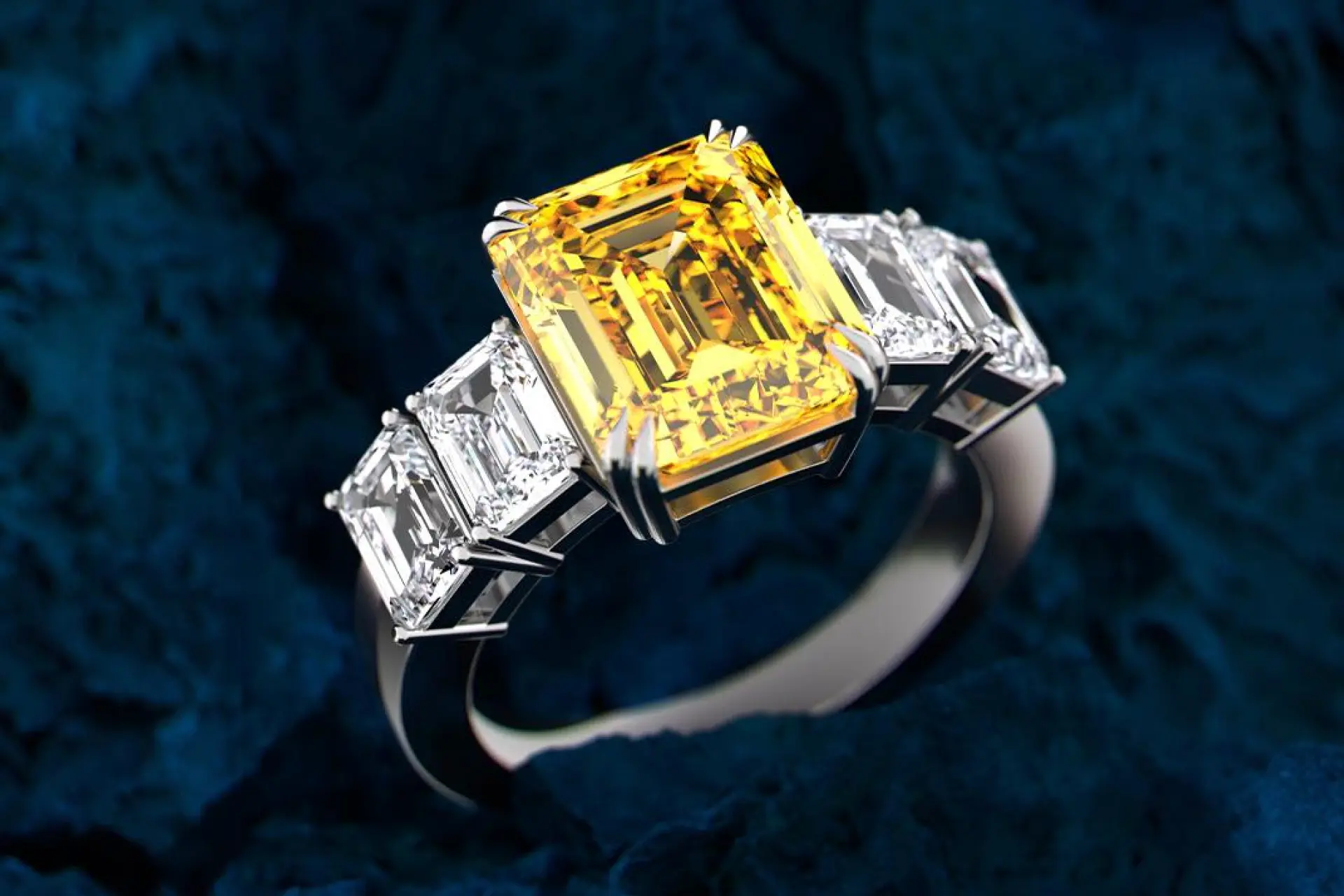
The Most Expensive Diamond Cut: The Direct Answer
The round brilliant is the most expensive diamond cut, and at the same carat weight, colour and clarity it typically commands a premium over every other shape. Two things drive that premium and neither is marketing. Cutting a round brilliant destroys more of the original rough stone than any other shape, often around half of it, and the round is the most in-demand shape for engagement rings worldwide. You are paying for wasted material and for competition.
If you want the cheapest route to the same carat weight, the answer is at the other end of the table: the elongated and rectangular shapes, particularly emerald and oval, keep far more of the rough and cost noticeably less for a stone that weighs the same.
Diamond Cuts Ranked by Price
| Shape | Relative price | Rough lost in cutting | Looks larger for the weight? |
|---|---|---|---|
| Round brilliant | Highest | Most | No |
| Marquise | Below round | Moderate | Yes, the most |
| Pear | Below round | Moderate | Yes |
| Oval | Below round | Lower | Yes |
| Princess | Clearly below round | Low | Moderate |
| Cushion | Clearly below round | Low | Moderate |
| Emerald | Usually lowest | Least | Yes |
One caution on the right-hand column. A shape that looks larger for its weight is spreading the same material over a wider face, which means it is also shallower. That is a genuine saving, not a trick, but it does mean the stone shows colour and inclusions more readily than a round of the same grade.
Most Expensive Diamond Shape or Most Expensive Diamond Cut: Are They the Same Question?
People use the two words interchangeably and the trade does not. Shape means the outline: round, oval, pear, emerald. Cut means how well the stone was faceted and proportioned, which is what a grading report scores as Excellent, Very Good or Good.
So the honest answer depends on which question you are asking. If you mean shape, the round brilliant is the most expensive. If you mean cut quality, an Excellent cut grade adds a premium within any shape, and that premium can exceed the difference between two shapes entirely. A well cut oval will cost more, and look better, than a poorly cut round of identical weight and colour.
The round brilliant is the most expensive diamond cut : and by a clear margin. Because cutting a round brilliant wastes roughly 50:60% of the original rough stone and demands a higher degree of mathematical precision than any other shape, it commands a consistent price premium over every other cut in the market.
But understanding diamond cut pricing goes deeper than a single answer. This guide covers which cuts cost the most and why, how GIA cut grades affect what you pay, and how to choose the right cut for your budget and style. For a complete introduction to the 4 Cs, see our Jewellery Buying Guide.
Diamond Shape vs Diamond Cut : A Confusion Worth Clearing Up
Before ranking cuts by price, it helps to separate two terms buyers often mix up:
- Shape refers to the outline of the diamond when viewed from above: round, princess, oval, pear, emerald, cushion, marquise, and so on.
- Cut (or cut quality) refers to how precisely the facets, proportions, symmetry, and polish are executed : the craftsmanship that determines how the stone handles light.
A round-shaped diamond can have an Excellent, a Good, or a Poor cut grade. Both shape and cut affect price, but in different ways. When most buyers ask “what is the most expensive diamond cut?”, they mean shape : and the answer is the round brilliant. When jewellers talk about cut quality, they mean the GIA grade scale below.
For a detailed explanation of how color interacts with these factors, see our Diamond Color Grading reference.
GIA Cut-Quality Grades Explained
For round brilliant diamonds, the Gemological Institute of America (GIA) grades cut quality on five levels. The grade directly affects price : an Excellent-cut stone typically costs more than a Good-cut stone of the same carat, color, and clarity.
| GIA Cut Grade | What It Means | Light Performance |
|---|---|---|
| Excellent | Optimal proportions and symmetry; maximum fire and brilliance | Nearly all light returned to the eye |
| Very Good | Minor deviations from ideal; still exceptional sparkle | Almost as bright as Excellent |
| Good | Visible trade-off between cut quality and rough yield | Noticeably less brilliant |
| Fair | Significant brilliance lost to poor proportions | Dull compared to Excellent |
| Poor | Most light leaks out through the bottom or sides | Minimal sparkle |
Cut quality grade applies formally only to round brilliant diamonds. For fancy shapes (oval, princess, pear, etc.), labs describe cut using terms like “Excellent polish/symmetry” but no formal overall cut grade is issued.
Why Diamond Cuts Affect Price More Than You Think
A diamond’s cut is the most important factor in determining its beauty and market value. Here is why:
- Brilliance: The amount of white light reflected from within the diamond to the viewer’s eye. A well-cut stone ensures light enters from the top, reflects completely through the internal facets, and exits from the top as intense sparkle.
- Fire: The dispersion of white light into spectral colors. A precise cut diffracts light into flashes of color that make a diamond look alive.
- Scintillation: The pattern of light and dark areas visible when a diamond moves. The contrast created by perfectly aligned facets drives scintillation.
- Symmetry: How precisely aligned the facets are. Asymmetrical facets disturb the light path and reduce brilliance.
- Polish: How smooth the outer surfaces are. Scratches or surface imperfections scatter light and dull the stone.
Cut vs. Carat: The Hidden Price Driver
When shopping for diamonds, “cut” and “carat” are the two most commonly confused characteristics. They affect price in entirely different ways:
Carat
- Definition: A unit of weight : one carat equals 0.2 grams (200 milligrams). Carat measures mass, not physical size.
- Impact on price: Price per carat rises steeply at certain thresholds (0.50, 0.75, 1.00, 2.00 ct) due to rarity. Two 1-carat diamonds can differ enormously in price because of cut, color, and clarity : see our Diamond Clarity Guide for the full breakdown.
Cut
- Definition: How skillfully the rough diamond is faceted into a finished gem : including dimensions, proportions, symmetry, and polish quality.
- Impact on price: Cut is the only one of the 4 Cs entirely determined by human skill. A poor cut can look intentionally dull even at high carat weight. An Excellent-cut stone can appear larger and more brilliant than a heavier stone with a lesser grade.
- Human Factor: The other 4 Cs (carat, color, clarity) are natural characteristics. Cut is the craftsperson’s contribution.
Round Brilliant : The Most Expensive Diamond Cut
The round brilliant cut has held the #1 position in price and popularity for over a century. Its 58 precisely calculated facets : 33 on the crown, 25 on the pavilion : are engineered to maximize three optical properties simultaneously: brilliance, fire, and scintillation. No other cut achieves this balance as consistently.
Rough Stone Waste: Why Round Costs More to Cut
Cutting a round brilliant wastes significantly more of the original rough crystal than cutting fancy shapes. A princess or cushion cut can be fashioned from a rough octahedron with relatively little waste. A round brilliant requires the cutter to sacrifice more of the rough to achieve perfect circular symmetry : which is why it commands a higher price even when the finished weight is the same. For a deep dive into all the major cut styles, see our Diamond Cuts Guide.
Light Return and Optical Symmetry
The round brilliant’s proportions : table percentage, crown angle, pavilion angle, total depth : must fall within a narrow range for the stone to achieve an Excellent cut grade. Even a 1° deviation in crown angle shifts light performance noticeably. This precision requires more time, more skilled labor, and more precise equipment than any other shape, all of which flow directly into price.
High Demand from Brides and Collectors
Round brilliant diamonds account for the majority of diamond ring sales globally. High demand relative to supply keeps prices elevated. A less popular shape : even one with similar technical quality : sells at a discount simply because it appeals to a smaller buyer pool.
Other High-Cost Diamond Cuts
While round brilliant leads in price, several fancy shapes command strong premiums of their own:
- Princess: The second most popular cut : square or rectangular with pointed corners. Offers excellent brilliance and wastes less rough than round, making it slightly less expensive for comparable quality. Popular for engagement rings that want a modern geometric look.
- Cushion: Square or rectangular with soft rounded corners. A classic, vintage shape with distinctive fire. Slightly lower price-per-carat than round because the shape allows more of the rough octahedron to be used.
- Oval: An elongated variation of the round brilliant that creates an illusion of length on the finger. Slightly less expensive than round per carat, but top-quality oval diamonds from sought-after cutters can approach round prices.
- Marquise: A boat-shaped cut with elongated points at each end. One of the shapes that appears largest face-up per carat, but requires precise symmetry or the “bowtie” effect (a dark shadow across the center) becomes visible.
Famous High-Value Diamonds : Historical Context
The most expensive individual diamonds ever sold are famous for their rarity, color, and historical significance : not just their cut type. It is worth noting that these are the most expensive individual diamonds, not the most expensive diamond cut types. Our Luxury Jewellery Guide covers how rarity and provenance amplify value.
- CTF Pink Star: A 59.60-carat natural Fancy Vivid Pink diamond sold for approximately $71.2 million at Sotheby’s (2017). An extraordinary example of how natural vs lab-grown origin affects rarity and value.
- Oppenheimer Blue: A 14.62-carat vivid blue diamond sold for $57.5 million (2016), the highest per-carat price for any blue diamond at auction.
- Cullinan I (Great Star of Africa): At 530 carats, the largest colorless fancy-cut diamond in the world, now set in the British Sovereign’s Sceptre. The original rough weighed 3,106.75 carats : the most dramatic example of how cutting transforms rough into finished gem.
What these stones have in common is exceptional rarity in color, size, or provenance : not a specific cut type. The round brilliant that you buy for an engagement ring commands its premium through engineering and market demand, not historical association.
Brilliance, Light Performance, and Value
Understanding light performance helps explain why two diamonds at the same carat weight and clarity look completely different:
- Brilliance (white light return) creates the overall brightness of the stone.
- Fire (light dispersion into spectral colors) creates those rainbow flashes visible in sunlight.
- Scintillation (the sparkle pattern when the diamond or viewer moves) is what makes a diamond look “alive”.
A round brilliant with an Excellent cut grade maximizes all three. An identical stone with a Fair cut may look noticeably dull to the naked eye : and will be priced significantly lower.
How Precision Crafting Impacts Cost
Cutting a rough diamond into a finished gemstone is one of the most precision-dependent manufacturing processes in any industry. A skilled cutter studies the rough for weeks before making the first cut, planning facet placement to maximize weight retention while achieving optimal light performance. The more complex the cut : and round brilliant is the most complex : the higher the labor cost, and the higher the price of the finished stone.
Choosing the Right Cut for Your Budget and Style
When choosing a diamond, the goal is finding the right balance between cut quality, carat weight, color, and clarity within your budget.
Cuts That Look Largest Face-Up Per Carat
Elongated shapes : oval, marquise, and pear : tend to look larger face-up than round diamonds of the same carat weight because they have a greater surface area. If visual size is a priority and budget is a consideration, these shapes can offer more apparent size per dollar than round.
Balancing Cut Quality and Price
Within any shape, prioritize cut quality above the other 4 Cs. A slightly lower color or clarity grade is far less visible to the naked eye than a poor cut. For round brilliants, target at minimum a Very Good cut grade : the jump from Good to Excellent is visible; the jump from Excellent to Very Good is not.
Investing in Cut for Resale and Heirloom Value
Round brilliant diamonds are the most liquid diamond shape on the secondary market. If you ever sell or pass the ring on, a round brilliant Excellent-cut stone will find buyers faster than an unusual fancy shape. Larger stones (over 1 carat) with strong 4C grades hold their value best over time.
FAQs About Diamond Cut Prices
What is the most expensive diamond cut?
The round brilliant is the most expensive diamond cut. It wastes the most rough stone in production and requires the highest degree of cutting precision : both of which are reflected in its price premium over all other shapes.
What is the cheapest diamond cut?
Emerald and asscher cuts are generally the least expensive cut shapes per carat. Their step-cut faceting wastes less rough stone and requires less complex machinery than the round brilliant’s 58-facet geometry. However, their clarity demands are higher : the open table and parallel facets make inclusions more visible, so you may need a higher clarity grade to achieve a clean look.
Which diamond cut holds its value the best?
Round brilliant diamonds hold their value better than any other cut shape, primarily because they represent the vast majority of diamond ring sales worldwide. High demand means a ready resale market at close to market rates. Fancy shapes : particularly unusual custom cuts : can be harder to sell and may sell at a steeper discount.
What is the highest quality diamond cut?
The GIA Excellent cut grade is the highest official cut quality rating for round brilliant diamonds. Some private grading labs and cutters use the term “Ideal” to denote stones that meet even stricter proportional tolerances than GIA Excellent. In practice, GIA Excellent and AGS Ideal represent the pinnacle of cut quality : these stones return the most light and command the highest prices for a given carat, color, and clarity.
Is cut or clarity more important for diamond price?
Cut has a greater impact on a diamond’s visible beauty than clarity. A diamond with an Excellent cut and VS2 clarity will typically look more brilliant and appealing than one with a Poor cut and FL (flawless) clarity. However, for price determination, both factors matter : an Excellent-cut, high-clarity stone commands a significant premium. When balancing the two, prioritize cut first: you can often drop to SI1 clarity without a visible difference, but a drop in cut quality is immediately apparent to the eye.
Where the Price Jumps as Carat Weight Rises
Price does not climb smoothly with weight. It steps up sharply at the round numbers, because that is where demand concentrates. A stone just under 1.00 carat costs noticeably less than one at exactly 1.00, and the difference on the finger is invisible to anyone who is not measuring. The same step happens approaching 2.00 carats.
This is the single easiest way to save real money without changing how the ring looks. Ask specifically for stones slightly below the round weights, because they are rarely the ones brought out first.
Cut Grade Beats Shape More Often Than People Expect
Within any one shape, moving from Good to Excellent cut changes how much light returns to the eye, and that shows immediately. Two stones of identical weight, colour and clarity can look like different stones entirely because one was cut for beauty and the other for weight retention.
If your budget forces a choice, take the better cut grade in a smaller stone over a larger stone cut poorly. The smaller one will look brighter, and brightness is what people actually notice.
The Least Expensive Diamond Cuts and What You Give Up
Emerald and asscher cuts are usually the most affordable at a given weight, because their step-cut faceting wastes little rough. What you give up is sparkle: step cuts produce broad flashes of light rather than the fine scintillation of a brilliant cut, and they hide inclusions far less well. Buying an emerald cut generally means buying a higher clarity grade, which claws back part of the saving.
Cushion and princess sit in the middle, keeping much of the brilliance of a round at a lower price. For most buyers trying to stretch a budget without an obvious compromise, those two are the practical answer rather than the emerald.
Choosing a Cut for Your Budget
Decide first whether size or sparkle matters more to the person wearing it, because that single answer settles most of the rest. If size is the priority, an oval or marquise gives the largest visible stone per riyal. If sparkle is the priority, stay with a round or princess and accept a smaller stone.
Then set the metal deliberately. A yellow gold setting lets you drop a colour grade or two without it showing, since there is no white metal beside the stone to expose the warmth. That saving is often larger than the one you would get by switching shape.
Every diamond we set comes from Kooheji Diamonds and is graded before setting. For single-stone designs see solitaire, and for bridal sets engagement.
Frequently asked questions
Which diamond cut is the most expensive?
The round brilliant, at the same carat weight, colour and clarity. Cutting a round destroys more of the rough stone than any other shape, often around half of it, and it is the most requested shape for engagement rings. You are paying for both the wasted material and the demand.
Is the most expensive diamond shape the same as the most expensive cut?
Not quite, because the trade uses the words differently. Shape is the outline, such as round or oval. Cut is the quality of the faceting, graded Excellent down to Poor. Round is the priciest shape, but an Excellent cut grade adds a premium inside any shape, and that premium can be larger than the gap between two shapes.
Why does one cut cost more than another from the same rough stone?
Because the shapes waste different amounts of that rough. A round brilliant requires cutting away far more material to reach its proportions than an emerald cut does. The finished stones weigh the same, but one consumed much more raw diamond to get there.
What is the cheapest diamond cut?
Usually emerald, with asscher close behind. Their step-cut faceting keeps most of the rough. The trade-off is that step cuts sparkle less and conceal inclusions poorly, so you often need a higher clarity grade, which offsets some of the saving.
Which cut looks biggest for the same carat weight?
Marquise, then pear and oval. Elongated shapes spread the same weight over a wider face, so they read larger on the hand. They are also shallower as a result, which means colour and inclusions are slightly easier to see than in a round of the same grade.
Does cut grade or carat weight move the price more?
Carat weight moves the total price fastest, especially across the round-number thresholds. Cut grade moves how the stone actually looks the most. For a piece that will be worn rather than resold, prioritise cut grade and buy slightly under a round weight.



 Contact Us
 My Account
 Find a Boutique