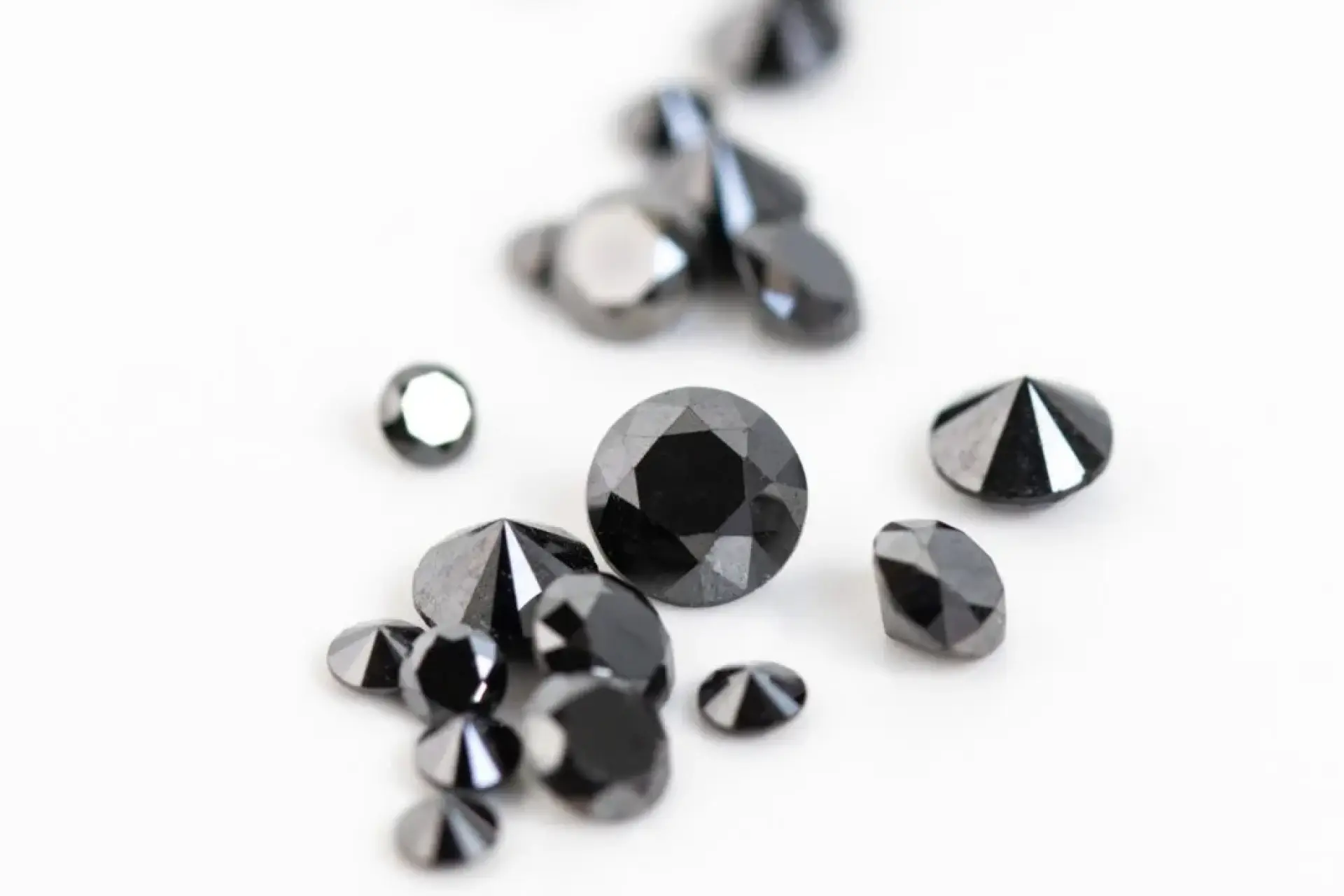
What Are Black Diamonds?
Black diamonds are real diamonds. They have the same carbon structure and the same hardness as colourless ones, and what makes them black is not a coating but the inside of the stone: dense clouds of graphite and other inclusions, so numerous that light cannot pass through. Where a colourless diamond is prized for clarity, a black diamond gets its colour from the opposite, and that is the single fact that explains most of the rest.
They fall into two broad groups. Natural black diamonds formed with those inclusions already in them, and treated black diamonds started as heavily included greyish or brownish stones that were heated or irradiated until they read as solid black. Both are genuine diamonds. Only one of them is rare, and the price gap between them is large.
Types of Black Diamonds
Carbonado is the rarest kind, a porous polycrystalline diamond found only in a couple of places on earth and unlike ordinary diamond in structure. Natural black diamonds of the more common sort are single crystals so heavily included with graphite that they appear black. Treated black diamonds make up most of what is sold: real diamonds of low clarity, turned uniformly black by heat or irradiation. Coated stones are the one category to be careful of, because the colour sits on the surface and can wear.
The practical difference is uniformity. A treated stone tends to be evenly, almost flatly black. A natural one often shows slight variation and a more metallic lustre. Neither is a fault, but they should not be priced the same.
| Natural | Treated | |
|---|---|---|
| Source of colour | Inclusions present from formation | Heat or irradiation applied later |
| Appearance | Slightly varied, metallic lustre | Very even, flat black |
| Rarity | Genuinely rare | Widely available |
| Price | Considerably higher | Accessible |
| Must be disclosed? | Origin stated on the report | Yes, treatment must be declared |
Is a Black Diamond a Real Diamond?
Yes. It is carbon in the same crystal structure, and it sits at the same point on the hardness scale as any other diamond. The difference is entirely in clarity: the inclusions that would be considered flaws in a colourless stone are the whole point here.
The thing that is not a real black diamond is black spinel, onyx or glass sold as one. Those are different materials, considerably softer, and worth a fraction of the price.
Black diamonds are a unique and mysterious type of diamond characterized by their deep color and special appeal. This stone has gained increasing popularity in recent years, especially in fine jewellery : explore our Jewellery Buying Guide for guidance. To fully understand black diamonds, we will delve into their properties, types, origins, uses, and prices.
Guide to Understanding Black Diamonds : Everything You Need to Know
Black diamonds are an extremely rare form of natural diamond. Unlike transparent diamonds, which derive their color from their pure crystalline structure, black diamonds gain their color from dense, uniformly distributed dark inclusions. Black diamonds are composed of a mixture of diamond, graphite, and amorphous carbon, with tiny crystalline deposits filling the pores. Carbonado is the hardest, densest, and most porous form of natural diamond. The following lines explain the characteristics of black diamonds:
- Color: They are characterized by their opaque black color, due to the presence of mineral impurities such as magnetite, hematite, and iron.
- Transparency: Unlike most other types of diamonds, black diamonds are completely opaque.
- Hardness: They are as hard as transparent diamonds, with a Mohs hardness of 10, making them one of the hardest natural materials.
- Composition: They consist of carbon with minor impurities and a polycrystalline crystal structure.
- Porosity: They are highly porous, making cutting and polishing difficult and requiring precision and high skill.
What Are Black Diamonds? Origins & Composition
Black diamonds, also known as carbonado, are a unique and rare form of natural diamond characterized by their opaque black color. They differ from the transparent, lustrous diamonds we know, and have distinctive properties that make them a focus of interest to geologists and jewelry experts alike.
Diamond Clarity Guide : covering inclusions, grading scales, and how they affect black diamond quality.
Origin:
The origin of natural black diamonds is still debated among scientists, and there are several theories about their formation:
- Terrestrial Origin: Some theories suggest that they form deep within the Earth under conditions of extreme pressure and heat, just like conventional diamonds, but the presence of certain impurities (especially graphite) and microscopic fractures in their structure is what gives them their black color.
- Extraterrestrial (cosmic) Origin: This is the theory most widely accepted by many researchers. This theory suggests that black diamonds may have an extraterrestrial origin, formed in outer space.
- Radiation: Another theory suggests that they may have formed through radiation.
Composition:
Black diamonds are primarily composed of carbon (C), the same element that makes up transparent diamonds and graphite. However, the arrangement of carbon atoms and the presence of various impurities are what distinguishes it:
- Polycrystalline form: Unlike transparent diamonds, which are typically a single, large crystal, black diamonds are polycrystalline, meaning they consist of aggregations of very small crystals of diamond, graphite, and amorphous carbon.
- Impurities: Black diamonds contain large amounts of dark-colored impurities and microscopic fractures, particularly graphite, which are responsible for their opaque black color. They can also contain small crystalline deposits that fill pores and reduce mineral impurities. Titanium nitride has been found in carbonado.
- Hardness: Despite its different appearance, black diamonds have a very high hardness (10 on the Mohs scale), making them one of the hardest forms of natural diamond.
- Density: The porosity of carbonado ranges from 1% (low porosity) to 10% (high porosity), which explains the variable specific gravity of this type.
Natural vs Treated: Carbonado vs Enhanced
- When choosing a black diamond, it’s important to understand the difference between natural (carbonado) and treated (enhanced) black diamonds. Each has unique characteristics that influence its appearance, value, and durability.
Discover More About Diamond Color Grading and how it influences the overall value of black diamonds in comparison to treated variants.
- While treated black diamonds offer an attractive and economical alternative, carbonado represents a higher value and unique rarity as an untreated natural stone, making it a distinct choice for buyers seeking authenticity : see our Genuine Gemstones Guide for details.
Physical Properties: Color, Clarity, and Durability
Black diamonds have unique physical properties that distinguish them from other types of diamonds, particularly in terms of color, clarity, and durability:
Hardness: Like all diamonds, black diamonds are among the hardest known natural materials, scoring 10 on the Mohs scale of hardness. This makes them highly resistant to scratches.
- Dark and Deep: Black diamonds are characterized by their dark color, ranging from dark gray to deep black.
- Dense Inclusions: Unlike transparent diamonds, where impurities tend to diminish their value, impurities are what give black diamonds their distinctive color. Black diamonds contain a very high number of internal inclusions, such as microscopic cracks and fissures, which give them their opaque black appearance.
- Hardness: Like all diamonds, black diamonds are among the hardest known natural materials, scoring 10 on the Mohs scale of hardness. This makes them highly resistant to scratches.
The Science Behind Their Unique Appearance
Black diamonds, also known as carbonado, have a unique appearance that is quite different from the transparent white diamonds we know. The secret behind this mysterious and beautiful appearance lies in their composition and distinct chemical and physical properties.
Benefits of Choosing Black Diamonds
Choosing black diamonds is a distinctive and attractive choice for many reasons, whether aesthetically, symbolically, or even practically. Here are its most prominent benefits:
Bold & Unique Aesthetic
- Timeless Elegance: Black diamonds add depth and elegance to any jewelry design and are a symbol of timeless elegance.
- Attractive Contrast: They can be used to create stunning contrasts with shiny metals or other coloured gemstones : explore our Types of Gemstones for comparison.
Durability for Everyday Wear
- One of the hardest minerals: Like white diamonds, black diamonds rank 10 on the Mohs scale of hardness, making them one of the hardest and most durable minerals.
- Ideal for everyday jewelry: Their hardness makes them ideal for use in engagement rings and Jewellery Buying Guide that last a lifetime and withstand everyday wear and tear.
Cost-Effective Alternative to White Diamonds
Choosing a black diamond is an investment in elegance and beauty that lasts a lifetime, and gives a unique and expressive look not found in lab-grown stones : see our Natural vs Lab-Grown for a full comparison.
Popular Uses: Jewelry & Styling Inspiration
Black diamonds, both natural and treated, are used in many applications due to their unique properties. The most common uses are:
Engagement Rings That Break Tradition
Fine Jewelry and Engagement Rings black diamonds have become an increasingly popular choice in fashion jewelry, particularly engagement rings, for those seeking bold, unconventional pieces. They add a touch of mystery, elegance, and uniqueness.
Everyday Jewelry: Necklaces, Earrings & Wedding Bands
Unconventional Engagement Rings many people are embracing black diamonds as a bold and different choice from traditional white diamonds for engagement rings. They add a touch of distinction and boldness. Black diamonds are an excellent choice for men’s wedding rings, reflecting a masculine and modern look that embodies strength and elegance.
Mix & Match: Pairing with Metals & Other Gems
Contrast in Design designers often combine black diamonds with white diamonds or other colored gemstones to create striking and eye-catching contrasts. Black diamonds pair well with a variety of colors and materials, allowing designers to create unique and eye-catching pieces ranging from classic to modern styles.
Evaluating & Buying Black Diamonds: A Buyer’s Guide
Black diamonds are a unique and contemporary option for those seeking a distinctive alternative to traditional white diamonds. They are characterized by their mysterious beauty and uniqueness, but their evaluation and purchase require an understanding of several factors different from that of clear diamonds:
Key Grading Factors: Carat, Cut, Color Intensity
When evaluating diamonds, there are four main factors known as the “4 Cs,” the global standards that determine their quality and value. These factors are:
- Carat refers to the weight of a diamond, not necessarily its size, although heavier diamonds are often larger.
- Diamond Cuts Guide: the cut is the most important factor in determining a diamond’s brilliance, sparkle, and fire (the dispersion of light into the colors of the spectrum).
- A diamond’s color refers to its lack of color.
- Diamond color is graded on a scale from D (completely colorless, the rarest and most valuable) to Z (light yellow or brown).
Lab-Treated vs Natural: What to Consider
When choosing between lab-grown (manufactured) diamonds and natural diamonds, there are several important factors to consider. Both are real diamonds and have the same chemical, physical, and optical composition, but they differ in origin, price, and several other considerations.
Working with Experts: Custom Design & Customization Service
When it comes to black diamonds, custom design, and personalization services, working with experts is key to realizing your vision. Our designers and craftsmen specializing in this field have the knowledge and skill to turn your ideas into reality.
Caring for Black Diamond Jewelry
Black diamond jewelry is a unique and elegant addition to any collection, characterized by its mysterious beauty and captivating brilliance. However, like any precious piece of jewelry, it requires proper care to maintain its brilliance and long-term durability. Here’s a comprehensive overview of how to care for black diamond jewelry:
Simple Home Cleaning Tips
- Gentle Cleaning at Home: Black diamonds can be cleaned at home using warm water and a small amount of mild dishwashing liquid.
- Soak the jewelry in the solution for a few minutes.
- Use a very soft toothbrush to gently remove any dirt or buildup from the surface and around the settings.
- Rinse thoroughly under clean, running water (make sure the drain plug is closed to prevent the jewelry from falling out!).
- Dry with a soft, lint-free cloth.
Professional Maintenance: When & Why
- Avoid strenuous activities: Remove your black diamond jewelry before engaging in strenuous activities such as sports, housework, gardening, or any manual labor that involves the risk of shock or scratches.
- Temperature: Although black diamonds are durable, sudden changes in extreme temperatures can damage the surrounding settings, so try to avoid exposing them to such conditions.
Storage & Handling Best Practices
- Separate Storage: Store black diamond jewelry separately from other pieces to prevent scratches. Diamonds, even black ones, are still one of the hardest materials known and can easily scratch other gemstones and metals.
- Soft Fabric Bag or Padded Jewelry Box: Use a soft fabric bag or padded jewelry box to protect against dust, scratches, and shock.
FAQs : All Your Burning Questions Answered
Are black diamonds as durable as white diamonds?
Yes, both black diamonds and white diamonds are extremely hard, rated at 10 on the Mohs scale of mineral hardness, the highest possible score. This means they are among the hardest natural materials on Earth and can only be scratched by another diamond.
Do black diamonds sparkle? What’s their luster like?
Yes, black diamonds sparkle, but in a different way than the transparent white diamonds we know.
Can I customize a ring with black diamonds?
Yes, you can definitely customize a ring with black diamonds! Black diamonds are becoming an increasingly popular choice for ring design, whether for an engagement, wedding, or simply a unique piece of jewelry. Black diamonds offer a bold, modern look and are also extremely versatile in design.
How to Tell a Real Black Diamond from Spinel, Onyx or Glass
The reliable answer is a report from a recognised laboratory, which will also state whether the colour is natural or treated. Short of that, there are two checks worth doing in the shop. Look at the surface under a single light: a diamond returns bright, sharp reflections from its facet edges, while onyx and glass look softer and more matte. Then look at the girdle and facet junctions with a loupe, where a diamond’s edges stay crisp and softer materials show slight rounding or chipping.
Weight is the other tell if you can compare two similar-sized stones. Black spinel is noticeably lighter than diamond for the same size. None of this replaces a certificate, but it will separate an obvious substitute from a genuine stone.
What Black Diamonds Cost and Why
Three things set the price. Origin comes first, and the gap between a genuinely natural black diamond and a treated one is wide. Then evenness of colour, since a stone that reads solid black without grey patches is worth more than a mottled one. Then size and the quality of the polish, because heavily included material is difficult to cut cleanly and a well finished black diamond represents real work.
Treated black diamonds are the accessible entry point and there is nothing wrong with them, provided you are told what you are buying and priced accordingly. The problem is only ever a treated stone sold at natural prices without disclosure.
Hardness, Cutting and Setting
A black diamond is as hard as any other diamond, so it resists scratching completely well in daily wear. But hardness is not the same as toughness. All those internal inclusions create planes of weakness, which makes black diamonds more prone to chipping under a sharp knock than a clean colourless stone of the same size.
The practical consequence is in the setting. A bezel, where metal wraps the girdle, protects the edges and suits a ring worn every day. High raised prongs leave the edges exposed. If the piece is a pendant or earrings, this matters far less, because those rarely take impacts.
Black Diamonds in Jewellery
They work best where contrast is the point. Against white metal a black diamond reads graphic and sharp, which is why the combination appears so often in men’s rings and in modern engagement designs. Against yellow gold the effect is warmer and more classical.
Pairing black diamonds with small colourless ones is the most common design device, because each makes the other look more extreme. For an everyday piece, a smaller black stone in a low protective setting will outlast a large raised one.
Related pieces sit in Kooheji Diamonds, and for rings specifically see rings or black gold for the darker metal pairings.
Caring for Black Diamond Jewellery
Clean with warm water, mild soap and a soft brush, and pay attention to the underside of the stone where film collects. Avoid ultrasonic cleaners: the vibration can propagate an existing internal fracture in a heavily included stone, and black diamonds are heavily included by definition.
Remove pieces before the gym, before cleaning products and before anything likely to knock the stone against a hard edge. Have the setting checked once or twice a year like any stone-set piece, since a loosened setting is what actually loses stones.
Frequently asked questions
What is a black diamond?
A real diamond whose colour comes from dense internal inclusions of graphite rather than from any coating. It has the same carbon structure and the same hardness as a colourless diamond. The inclusions that would count as flaws in a clear stone are exactly what produces the black.
Are black diamonds real diamonds?
Yes. They are chemically and structurally diamond and sit at the same hardness. What is not a real black diamond is black spinel, onyx or glass sold as one, and those are much softer and worth a fraction of the price.
What is the difference between natural and treated black diamonds?
Natural stones formed with their inclusions already present. Treated stones began as low-clarity greyish or brownish diamonds and were heated or irradiated until they read solid black. Both are genuine diamonds, but natural ones are far rarer and cost considerably more, and any treatment must be disclosed.
Are black diamonds valuable?
It depends entirely on origin. A genuinely natural black diamond, especially carbonado, is rare and priced accordingly. Treated black diamonds are widely available and much more accessible. Evenness of colour and quality of polish then set the price within each group.
Are black diamonds durable enough for an everyday ring?
They resist scratching as well as any diamond, but the internal inclusions make them somewhat more prone to chipping from a sharp knock. For daily wear choose a bezel or another protective setting rather than high exposed prongs.
How can I tell a black diamond from black spinel or onyx?
A certificate is the only definitive answer. In the shop, a diamond returns sharper reflections from its facet edges while onyx and glass look softer, the facet junctions stay crisp under a loupe, and diamond is noticeably heavier than spinel for the same size.
Can black diamonds be cleaned in an ultrasonic cleaner?
Better not to. Black diamonds are heavily included by nature, and ultrasonic vibration can extend an existing internal fracture. Warm water, mild soap and a soft brush is the safe method.



 Contact Us
 My Account
 Find a Boutique